

Hey there! As a supplier of 5 Axis Bridge Saws, I often get asked about just how difficult it is to operate these high - tech machines. Well, let me break it down for you.
First off, what's a 5 Axis Bridge Saw? It's a real game - changer in the stone - cutting industry. This machine can move in five different axes simultaneously, allowing for incredibly precise and complex cuts on stone, granite, and other hard materials. It's used in large - scale manufacturing, construction projects, and even in high - end custom stonework.
Understanding the Basics
When you first look at a 5 Axis Bridge Saw, it can be a bit intimidating. There are so many moving parts, controls, and settings. But like any piece of equipment, once you get the hang of the basics, it becomes much easier.
The first thing you need to understand is the concept of the five axes. In a nutshell, these axes allow the saw blade to move in multiple directions. The three linear axes (X, Y, and Z) control the horizontal, vertical, and depth movements of the saw. The two rotational axes (A and B) enable the blade to tilt and swivel. This combination gives you the power to create 3D cuts, bevels, and custom shapes that would be nearly impossible to achieve by hand or with a simpler saw.
Operator Training
One of the biggest factors in determining how difficult it is to operate a 5 Axis Bridge Saw is the level of training the operator has. Good training is essential. A well - trained operator will know how to use the machine's features safely and efficiently.
At our company, we offer comprehensive training programs for anyone who purchases one of our 5 Axis CNC Stone Cutting Machine. Our training covers everything from machine setup to programming. We teach operators how to use the control panel, which is where you'll input all the cutting parameters such as speed, depth, and angle.
During training, operators learn how to create cutting programs. You can design simple cuts for straight edges or complex 3D geometries. These programs are often created using CAD (Computer - Aided Design) software, which interfaces with the saw's control system. Once the program is loaded, the machine can execute the cut with amazing precision.
Maintenance and Safety
Another aspect of operating a 5 Axis Bridge Saw is maintenance. Keeping the machine in good working condition is crucial for both performance and safety. Regular maintenance tasks include checking the blades for wear and tear, lubricating moving parts, and ensuring that all sensors are functioning correctly.
Safety is also a top priority. The saw blade spins at high speeds, and the machine is very powerful. Operators must wear the appropriate safety gear, such as goggles, ear protection, and gloves. They also need to follow strict safety procedures when handling the stone materials and operating the machine.
Real - World Challenges
In real - world applications, there are a few challenges that operators might face. One common issue is dealing with different types of stone. Granite, marble, and limestone all have different hardness levels and textures. This means that the cutting parameters need to be adjusted accordingly. A harder stone might require a slower cutting speed and more pressure, while a softer stone can be cut more quickly.
Another challenge is working with irregularly shaped pieces of stone. The 5 Axis Bridge Saw is designed to handle complex cuts, but programming the machine to work around odd shapes can be tricky. It often requires some creativity and problem - solving skills.
The Learning Curve
The learning curve for operating a 5 Axis Bridge Saw can vary from person to person. Some people pick it up quickly, especially if they have a background in machining or stonework. Others might need more time and practice to become proficient.
On average, it takes a few weeks of training and hands - on experience to get a good grasp of the basic operations. Becoming an expert, however, can take months or even years. With continuous learning and practice, operators can become more efficient and produce higher - quality cuts.
The Benefits Outweigh the Difficulty
Despite the challenges, the benefits of using a 5 Axis Bridge Saw are huge. It can significantly increase productivity. With its ability to make complex cuts quickly, it can reduce the time it takes to complete a project. This means more jobs can be done in less time, which is great for business.
The precision of the 5 Axis Bridge Saw also leads to better - quality products. Whether you're making countertops, sculptures, or architectural elements, the machine can produce cuts that are accurate to within a fraction of a millimeter. This level of precision is hard to achieve with other cutting methods.
Related Machines
If you're in the market for stone - cutting equipment, you might also be interested in our Automatic Loading And Unloading Stone Cutting Machine. This machine takes the hassle out of loading and unloading heavy stone slabs, further increasing efficiency.
Our Granite CNC Machine is also a great option for those specifically working with granite. It's designed to handle the hardness of granite and can produce high - quality cuts with ease.
Conclusion
So, how difficult is it to operate a 5 Axis Bridge Saw? Well, it's not a walk in the park, but it's definitely doable. With proper training, regular maintenance, and a bit of practice, anyone can learn to operate this amazing machine.
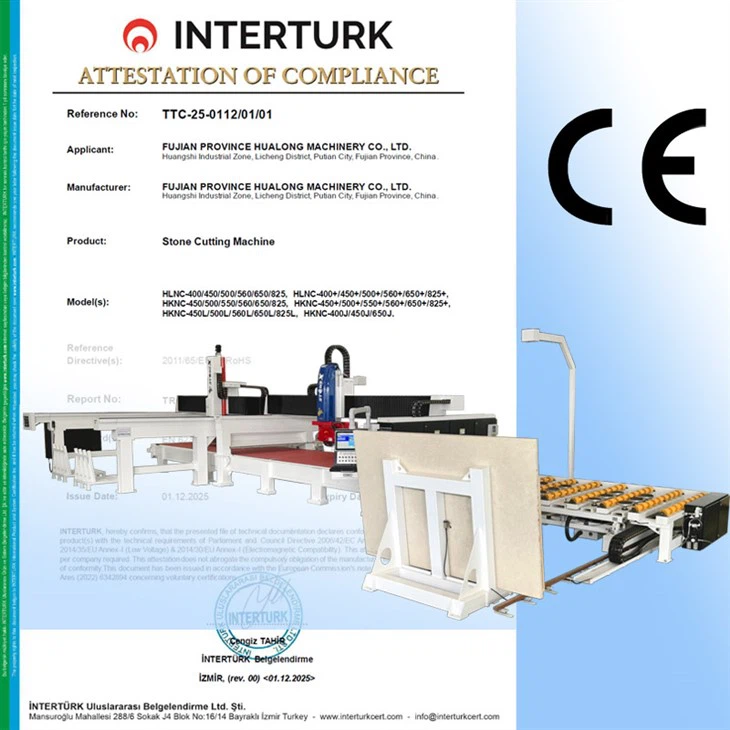
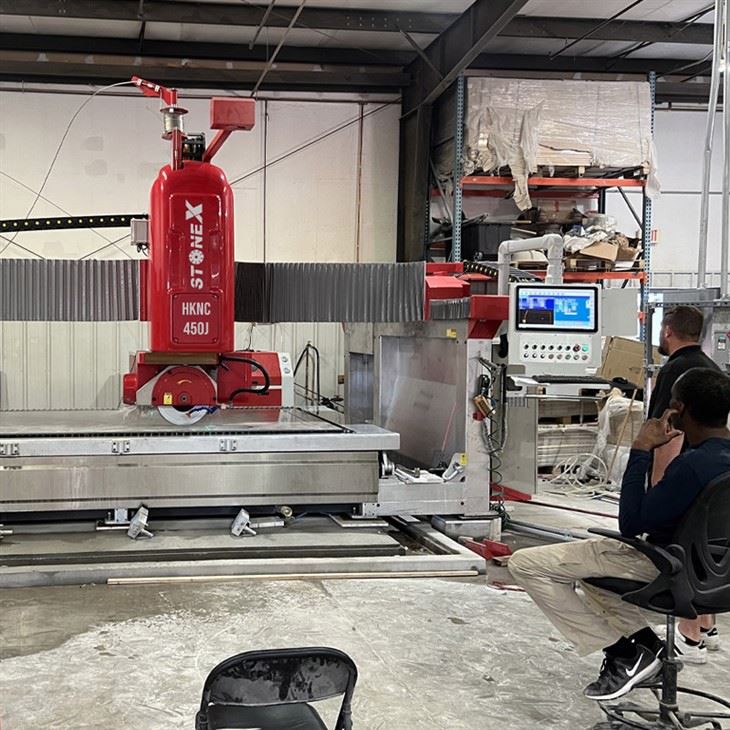
If you're thinking about purchasing a 5 Axis Bridge Saw or any of our other stone - cutting equipment, we'd love to talk to you. Whether you're a small - scale stoneworker or a large manufacturing company, we have the right solution for you. Contact us today to start a conversation about how we can help you take your stone - cutting business to the next level.
References
- "Advanced Stone Cutting Techniques", Stone Industry Journal, 2022.
- "5 Axis Machining: Principles and Practices", Manufacturing Technology Press, 2021.